
Unified Identity & Secure Access
Built on zero trust, with secure access for every scenario
VPN answers “can I connect”. Today’s secure access must also answer “who can connect, and what can they reach”
In the past, enterprises used VPNs, firewalls and similar tools to bring users safely into the internal network.
But as business moves to the cloud and remote work, mobile terminals and multi-branch environments become common, “connecting to the network” no longer means “secure access”:
- Can the user’s identity be trusted?
- Is this terminal secure?
- Once logged in, should they be able to reach every internal resource?
- Should different users and different businesses have different access permissions?
- Can access be continuously controlled and fully audited?
What truly needs control is not just the network connection, but every single access.
Zero trust does not mean “nobody gets in”
It answers a simpler question:
Never trust by default before access; keep verifying during access; allow only the resources that are truly needed.
Zero trust is not a simple replacement for VPN, nor does it require building a huge new infrastructure.
It is better seen as a new way to secure access:
- Trusted identity
- Trusted terminal
- Clear permissions
- Controlled access
- Fully auditable
Let “connecting to the network” gradually become “accessing business by identity and permission”.
Core Concept
One security core, three capabilities, across every access scenario.
- 01
Zero-trust foundation
Network location is never trusted by default; continuous security control is applied around identity, terminals, permissions and access behavior.
- 02
Scenario-oriented
Secure access that fits real business needs in core enterprise business, government and enterprise offices, and industrial sites.
- 03
Unified security capability
Identity authentication, access control, security policy and audit are built into the access process, giving every deployment one management foundation.
VPN, SASE and Zero Trust: How Do They Relate?
| Traditional VPN | SASE | Zero-trust secure access |
|---|---|---|
| Focuses on network connectivity | Combines network and security capabilities | Focuses on access trust and permissions |
| Lets users into a designated network | Delivers cloud-based network security services | Lets users reach designated resources |
| Traditional intranet access model | Fits cloud and multi-branch scenarios | Fits identity-based, fine-grained access |
| “Connect in” | “Connectivity + security services” | “Verify, then access by permission” |
The three are not simple substitutes for one another.
VPN still solves many traditional remote-access problems; SASE suits cloud, branch and wide-area network environments; zero trust focuses on the trust relationship and permission control of access itself.
So the real question is not “whether to adopt zero trust”, but: What kind of secure access does your business environment need?
Find the Right Way to Secure Access
We do not force every scenario into one product. Start from your users, terminals and business environment, and choose the access method that fits.
SecureLink
For SMEs and private enterprises.
No complex identity-system build-out. Deploy quickly, with basic identity authentication and access control for core business.
→ Learn about SecureLinkUnified identity authentication & admission
For government, state-owned enterprises and large offices.
Build a unified identity authentication and secure admission system around user identity, terminal state, access permissions and security audit.
→ Learn about unified identity admissionTrusted access protection
For plants, workshops, service halls, outlets and campuses.
For PLCs, industrial equipment, dedicated terminals and other headless devices that cannot run a security client, identity recognition, access control and protection are applied on the network side.
→ Learn about trusted access protectionBehind the solution, a working product
Unified identity authentication & admission brings authentication, admission and audit into one platform, with a mobile token app.
- 01
Unified sign-in
Users and endpoints authenticate at one entry before reaching authorized business systems.
- 02
One-time passcodes
The phone app generates passcodes to add another identity confirmation at sign-in.
- 03
Dashboard
Users, endpoints, applications and access events on one screen for management and tracing.
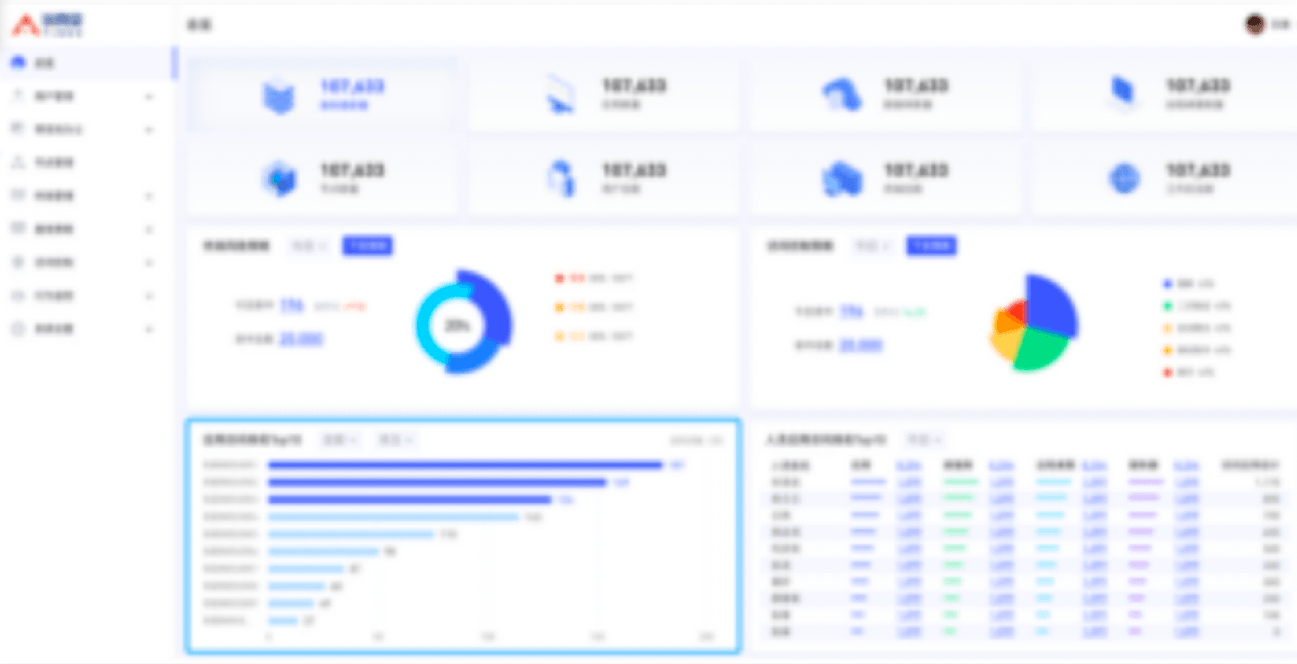
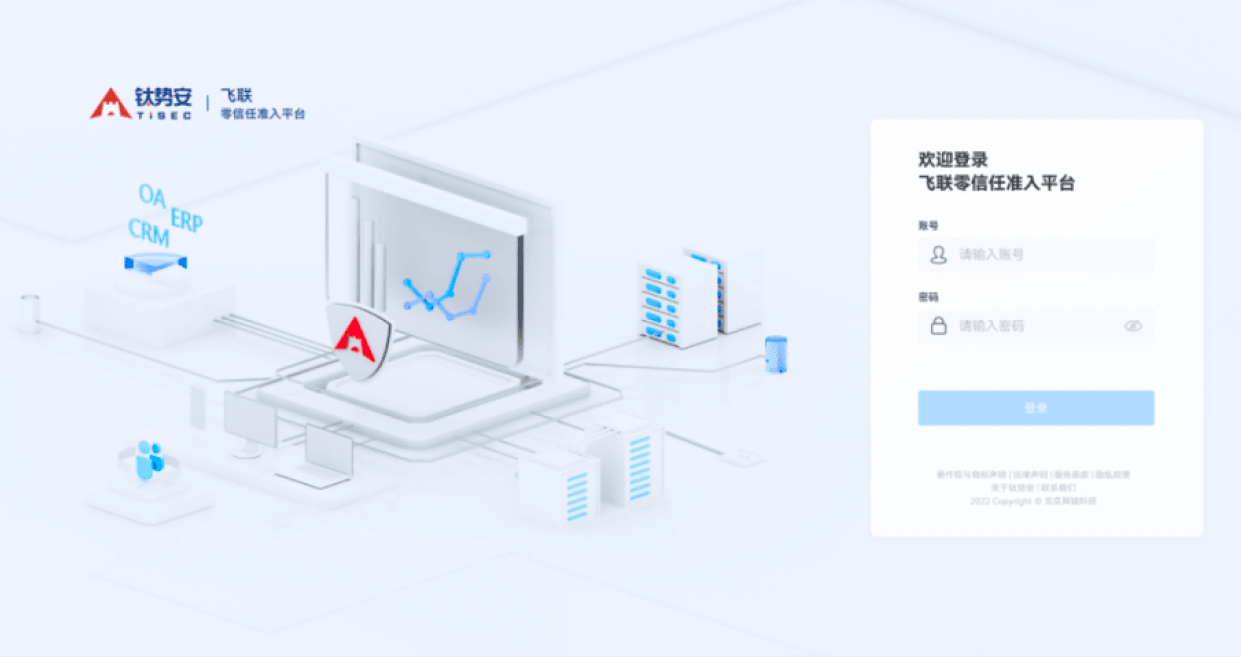
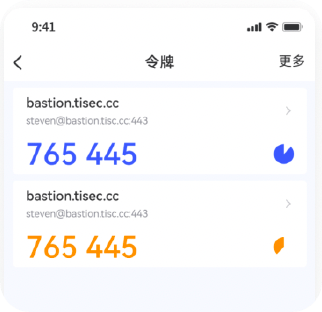
Screens are product screenshots for illustration, dashboard figures are blurred; features and visuals follow the delivered release.